
A Legend of Your Own
Selin
Sealkeeper of Fire and Earth
Selin · 3 April 1991 · 07:15 · İzmir
Everything I make will outlive me.
Thessa’s oath, Selin’s word
Selin’s details
- Born
- 3 April 1991, 07:15, İzmir (GMT+3, summer time)
- Sun
- Aries 12°
- Moon
- Scorpio 28°
- Rising
- Aries 19°
- Occupation
- Ceramic artist; she has her own kiln and studio
- Three words
- Stubborn, warm, impatient
- What she loves
- The mornings she opens the kiln
Chapter I
The Order of the Skies
The sky on the morning Selin was born
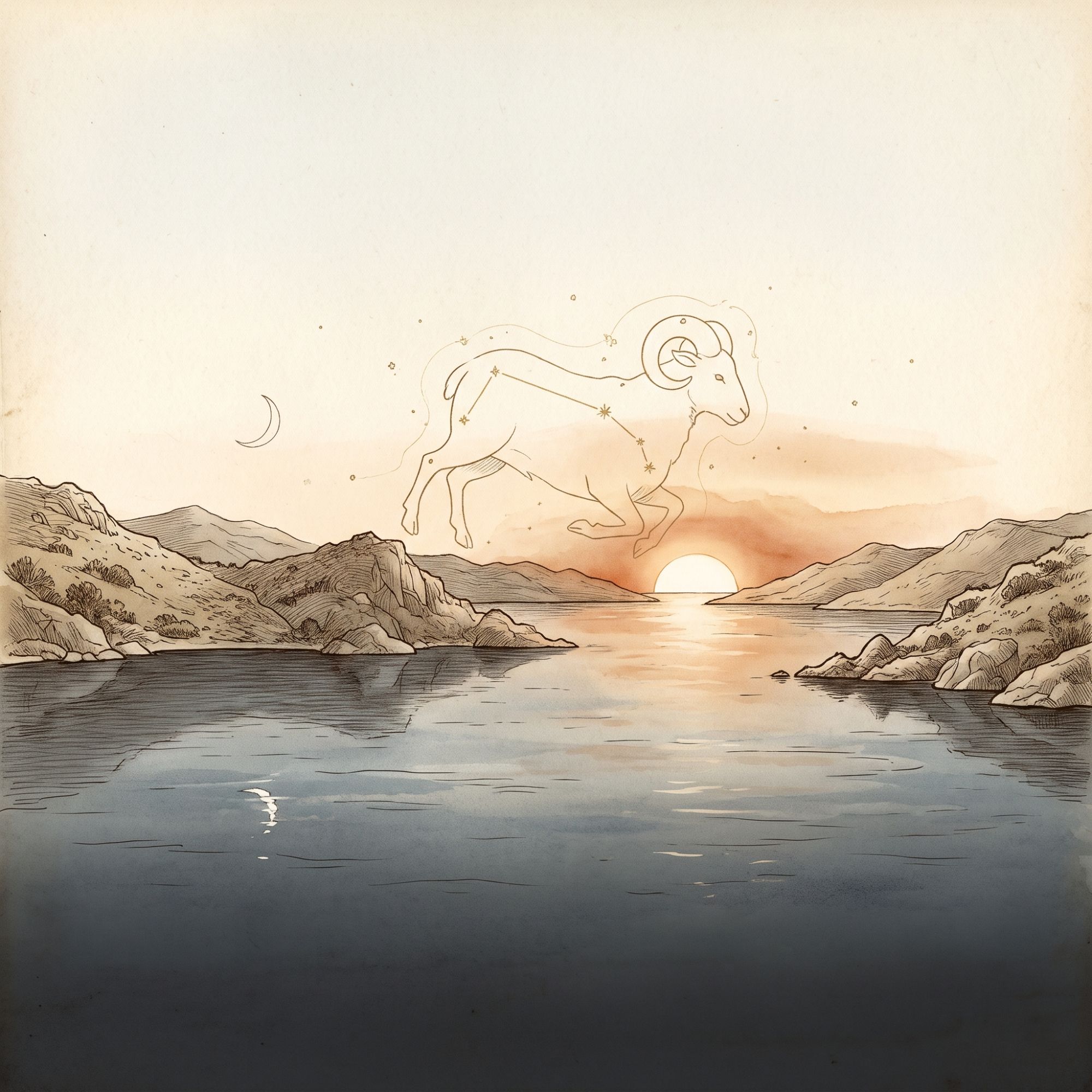
Selin, when you were born the sun was still rising over İzmir, and Aries stood on the eastern horizon. Your Sun was in the same sign. That morning the sky told a girl named Selin one thing, twice: begin.
People with Aries fire usually rush to the next thing before finishing the last. What sets Selin apart is that she has learned to shut that fire inside a kiln. Your Moon sits in the final degrees of Scorpio; within you runs a water far deeper and far more patient than anything you show the world. No one sees it, but you, Selin, will chase the colour of a glaze for weeks. You knead clay like fire and wait on fire like water.
The secret of Selin’s chart lies in this duality: courage first, then depth. The hand first, then the kiln.
Chapter II
Echo of a Past Life
Selin’s trace in history: Thessa of Klazomenai
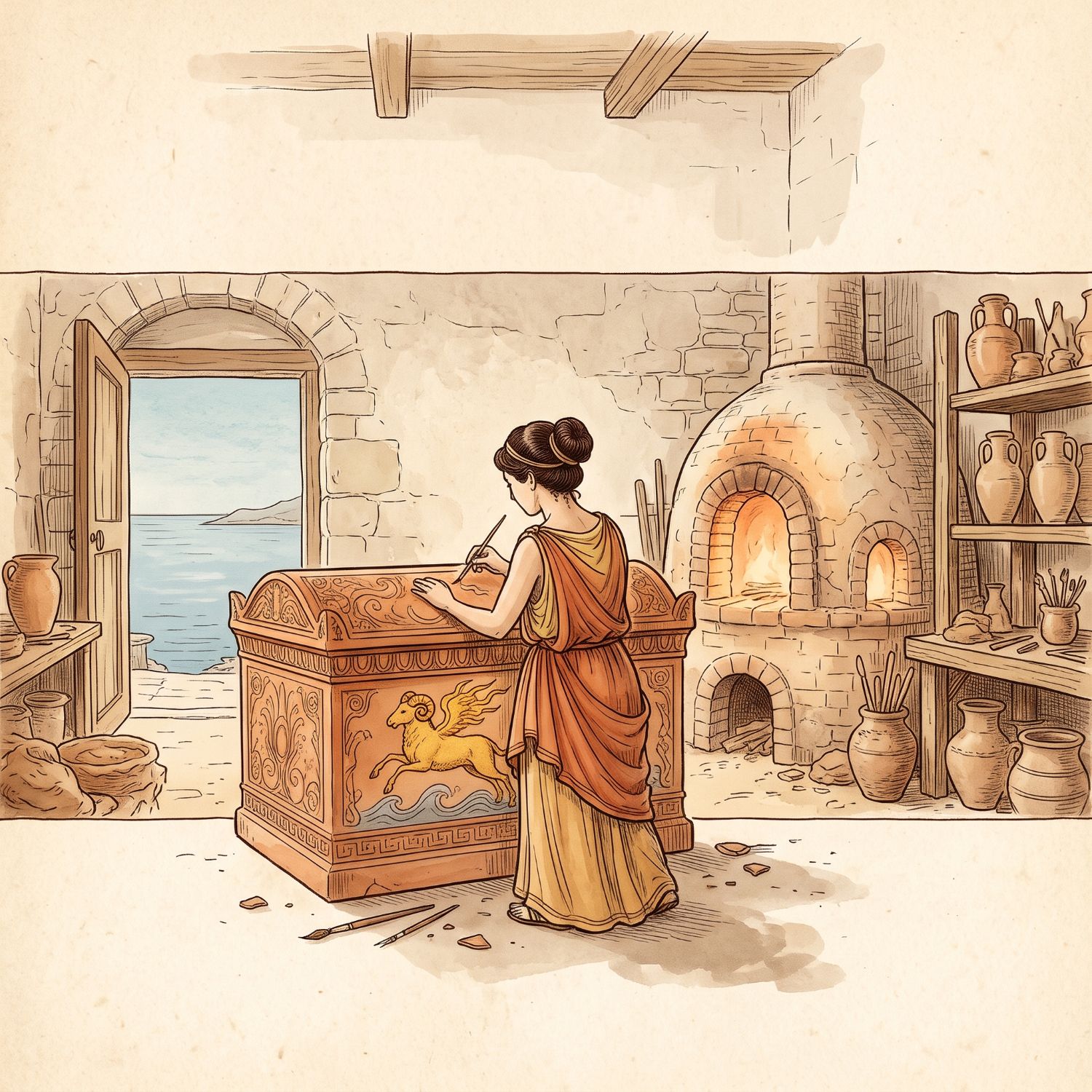
The sixth century BC. A workshop in Klazomenai, at the western tip of the Gulf of İzmir. A few hours from the shore Selin walks today, the city’s famous terracotta sarcophagi are painted here: chariots, lions and running horses along their edges.
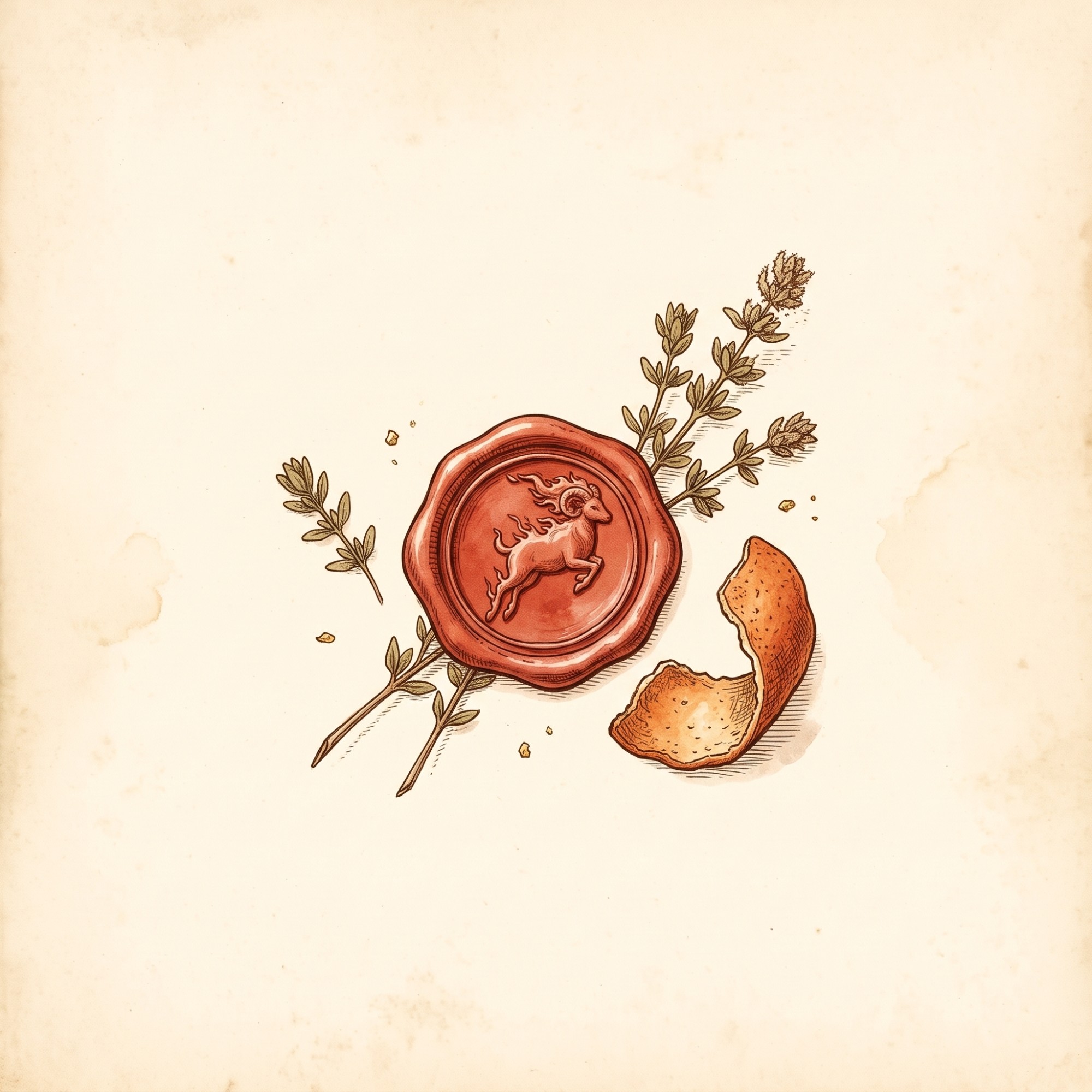
The master of the workshop is Thessa. No one is used to calling her “master”; yet when the first kiln cracks, everyone turns to her. Because Thessa, just like Selin, can tell from the sound of the clay when it is ready, and knows from the direction of the wind how hot the kiln will burn. One day, on the edge of the harbour commander’s sarcophagus, she paints not a lion but a dream of her own: a ram of flame leaping across the sea. There is argument, there are objections; still, the sarcophagus is fired just as she drew it.
Thessa’s oath was short; two and a half thousand years later it became Selin’s oath too:
Everything I make will outlive me.
Today every bowl on Selin’s shelves carries that oath forward.
Chapter III
Source of Inspiration
Two myths that tell Selin’s story
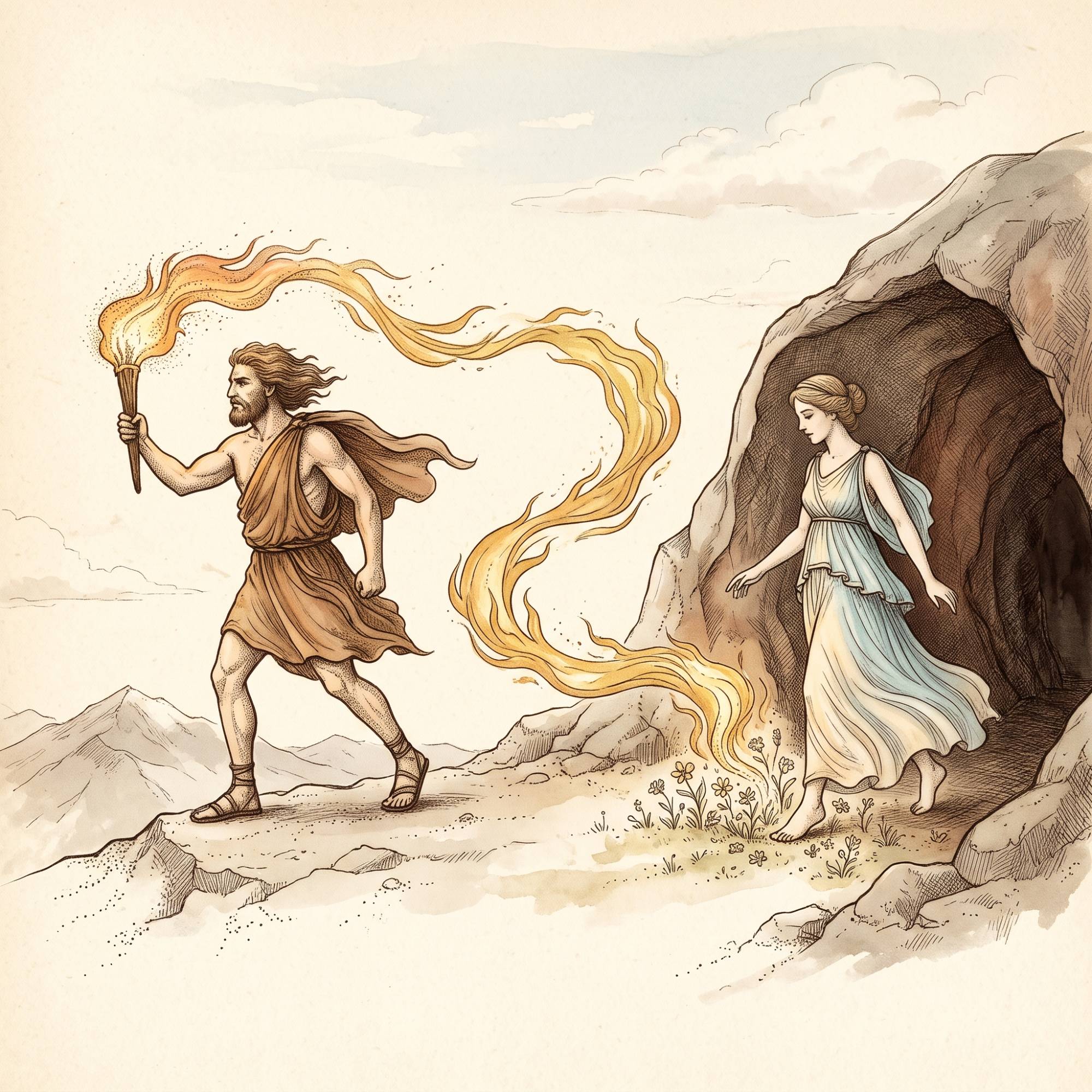
The first figure who tells Selin’s story is not Hephaestus but Prometheus, who stole his fire and gave it to humankind. You don’t hoard fire, Selin; you hand it out to every student you teach in your studio, to every morning you open the kiln.
The second figure is Persephone, the goddess who descends to the underworld each year and returns with the spring. A Scorpio Moon says Selin has seasons like this too: weeks when she speaks to no one and stays only with the earth. Then one morning you open the studio door and come out with a new series.
Selin’s legend is the meeting, in one person, of the one who steals fire and the one who returns from below.
Chapter IV
Sensory Seal
The melody that belongs to Selin
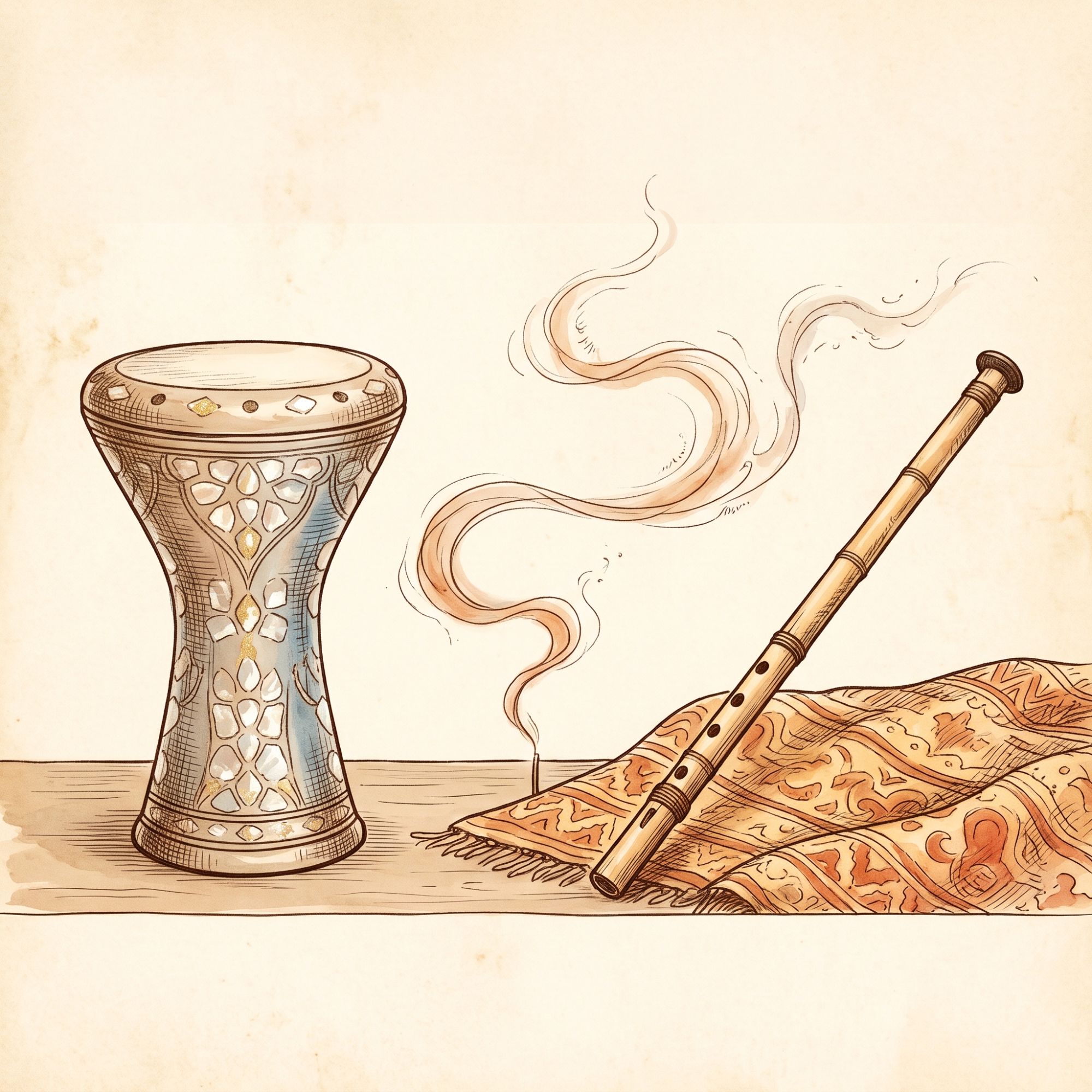
Selin’s melody begins with the quick, resolute beat of a darbuka. The heartbeat of Aries. Then the rhythm slows, and beneath it a low ney comes in, like the hum left inside the kiln once its door is shut.
Listen to this melody not while you work but while you wait for the kiln, Selin. The darbuka reminds you why you began; the ney, why you wait.
Selin’s rhythm: a single piece moving from 9/8 into a calm 4/4. Tempo: a fast start, a slow ending.
Chapter V
Scent and Tea Ritual
The scents and the tea that recall Selin
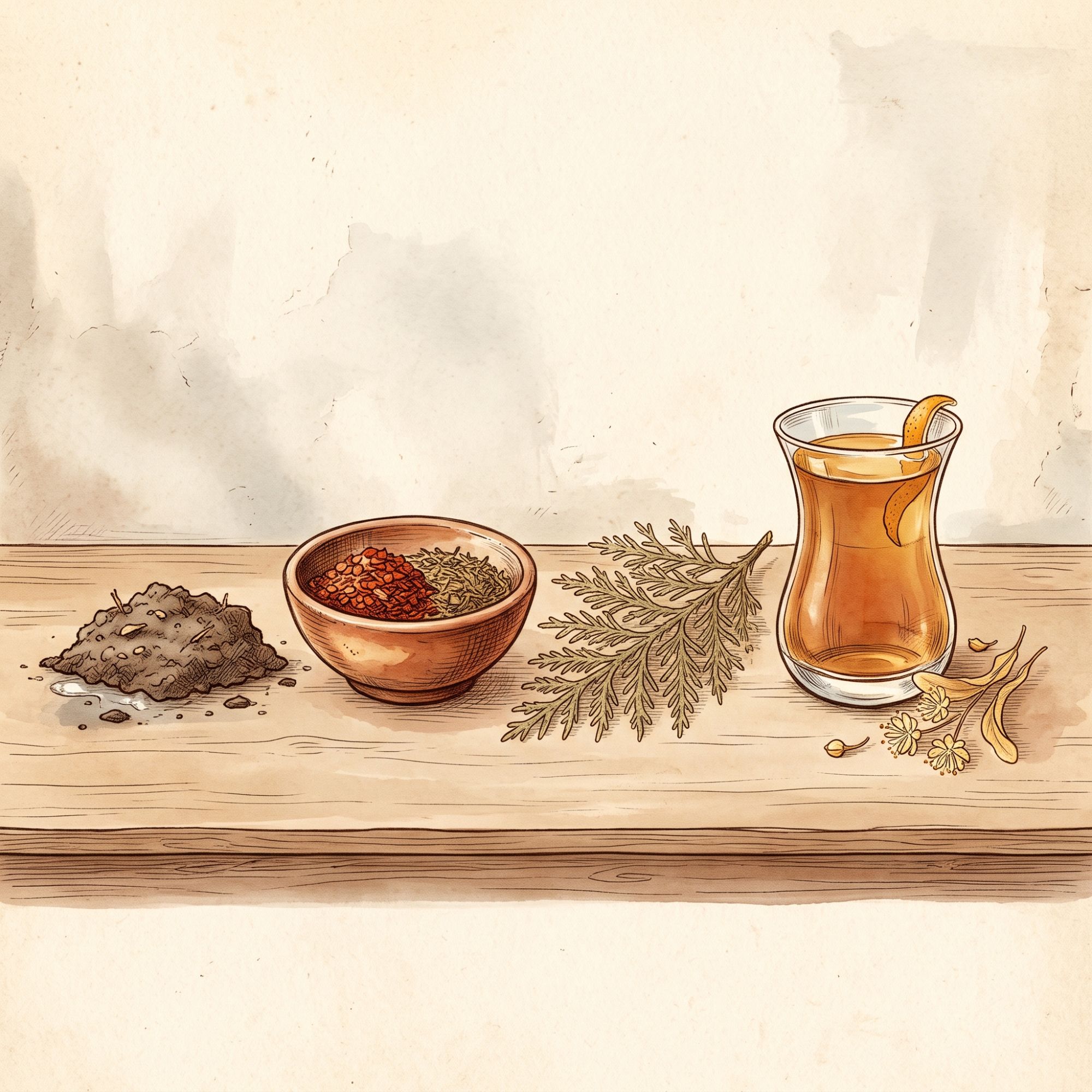
Three scents recall Selin:
- Wet earth after rain. Clay in its first state; for Selin, the moment when everything is still possible.
- Aleppo pepper flakes from İzmir and dried thyme. The burning but warm side of Aries fire.
- Cedarwood. Kiln wood; the scent of patience and waiting.
Selin’s ritual
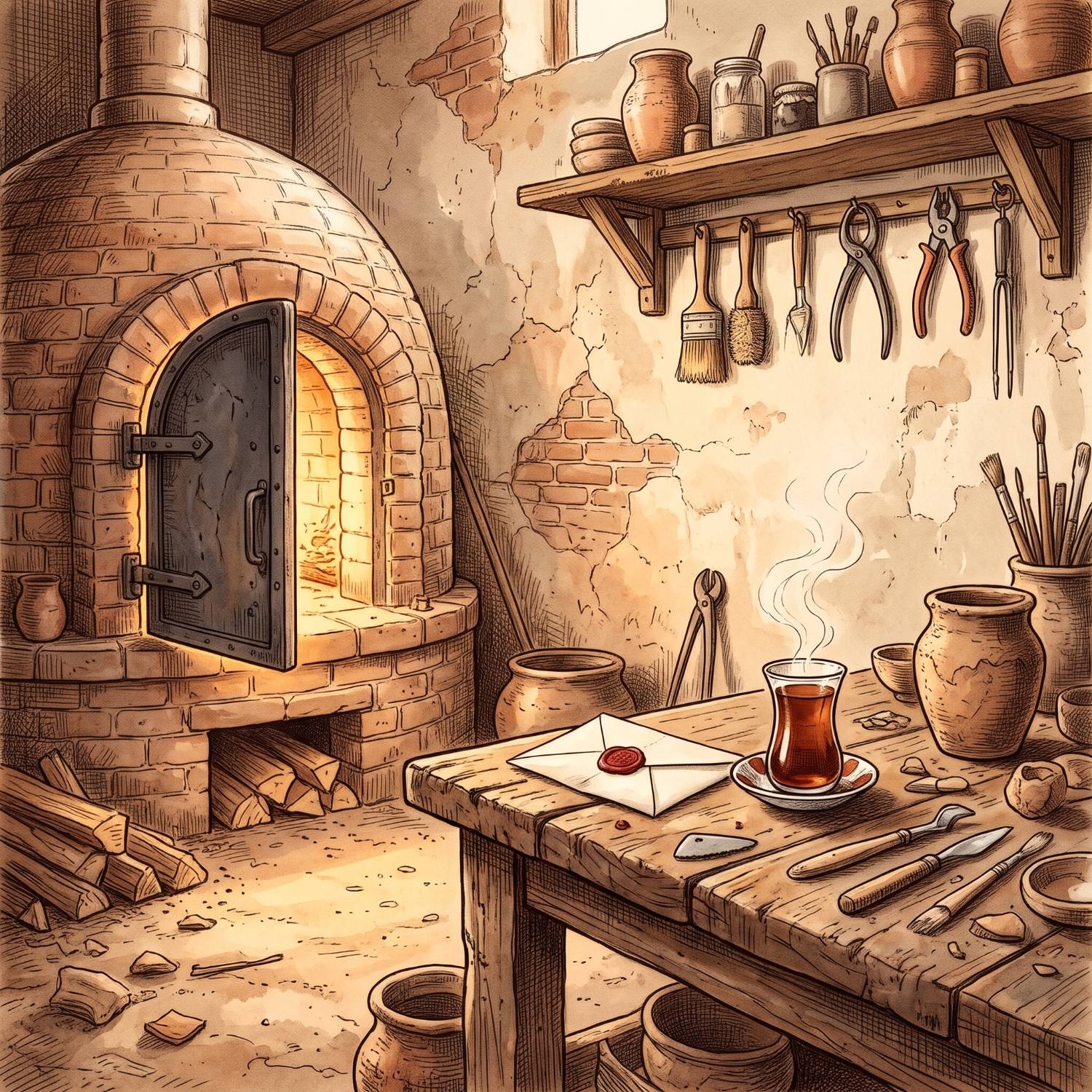
Before starting a new piece, breathe in a handful of wet earth or a piece of cedar. This is the sign Selin gives herself: you are in Thessa’s workshop, the fire is lit.
Selin’s tea: The Kilnside Blend
Lemon balm, linden and a piece of dried orange peel. The lemony freshness of lemon balm carries the speed of Selin’s Aries fire; the soft sweetness of linden, the depth of her Scorpio Moon; and the orange peel, the sun of İzmir, the city where she was born.
- Blend: lemon balm, linden, orange peel
- Measure: one teaspoon per tea glass
- Steeping: five minutes
Brew it after lighting the kiln, in the wait before you open the door. One teaspoon of the blend per tea glass, five minutes. While the fire does its work inside, you too, Selin, simply wait for the length of one cup.
This blend is a suggestion of taste and ritual. If you are pregnant, breastfeeding, take regular medication or are sensitive to any herb, consult your doctor first.
Chapter VI
Inner Architecture and Symbols
Selin’s inner architecture and her three symbols
Selin, you decide quickly and you don’t go back on your decisions. To others this sometimes looks like harshness; for you, though, clarity is a form of respect. Knowing what you want means not wasting anyone else’s time.
But Selin’s real strength is that she is at peace with the crack. When a bowl cracks in the kiln, you see it not as an ending but as a change of direction. Your Scorpio Moon, Selin, has given you the ability to rebuild what has fallen.
Things those who know Selin well know, but rarely say:
- When an idea comes to you, you want to try it right away; planning often feels to you like delaying the work. Selin’s notebook is full of unfinished sketches and she isn’t ashamed of it; to her, the unfinished ones are an archive, not a failure.
- Your anger comes fast and goes fast. But when you are hurt, it’s different: on the outside you seem to recover quickly, while inside you keep that moment for a long time. Selin holds no grudges, but she doesn’t forget either.
- You find it hard to accept praise. When someone says “This turned out beautifully, Selin,” your first reaction is to point out a flaw in the piece. Because you aren’t thinking about this piece; you’re thinking about the next one.
- Asking for help is hard for you. If you can do something yourself, asking someone else feels like a waste of time. That’s why the people around Selin sometimes don’t know how to help her.
- Your most productive moments are the ones when no one is watching. In the studio, headphones on, hands covered in clay; that’s when Selin doesn’t look at her phone and forgets the time.
- You show the people you love not with words but by doing: a bowl, something mended, something brought at an unexpected moment. Selin’s love is something you can hold in your hands.
None of this is a shortcoming. It all comes from the same source: a temperament that takes its work seriously, that burns fast but fires deep. Selin’s temperament.
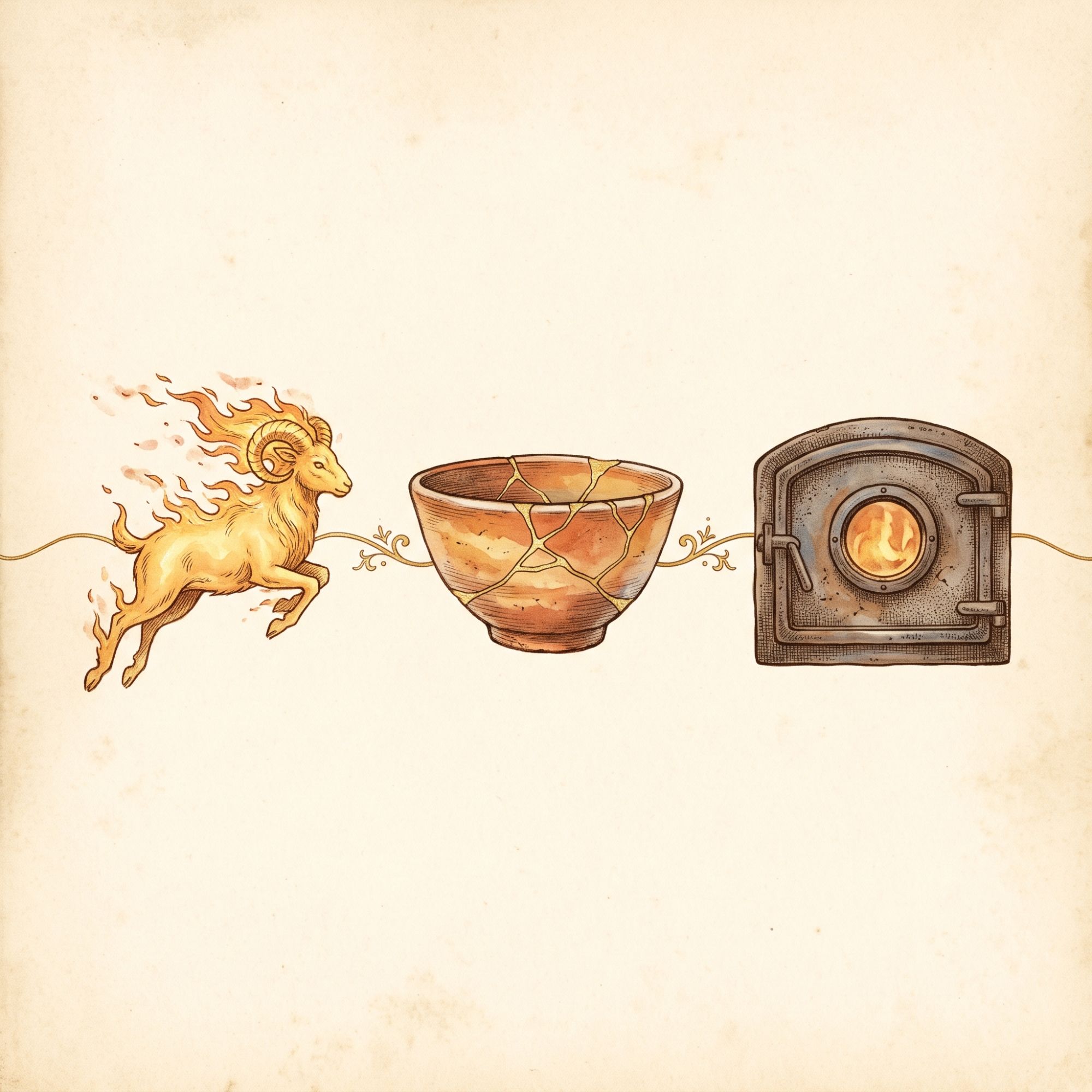
Selin’s three symbols:
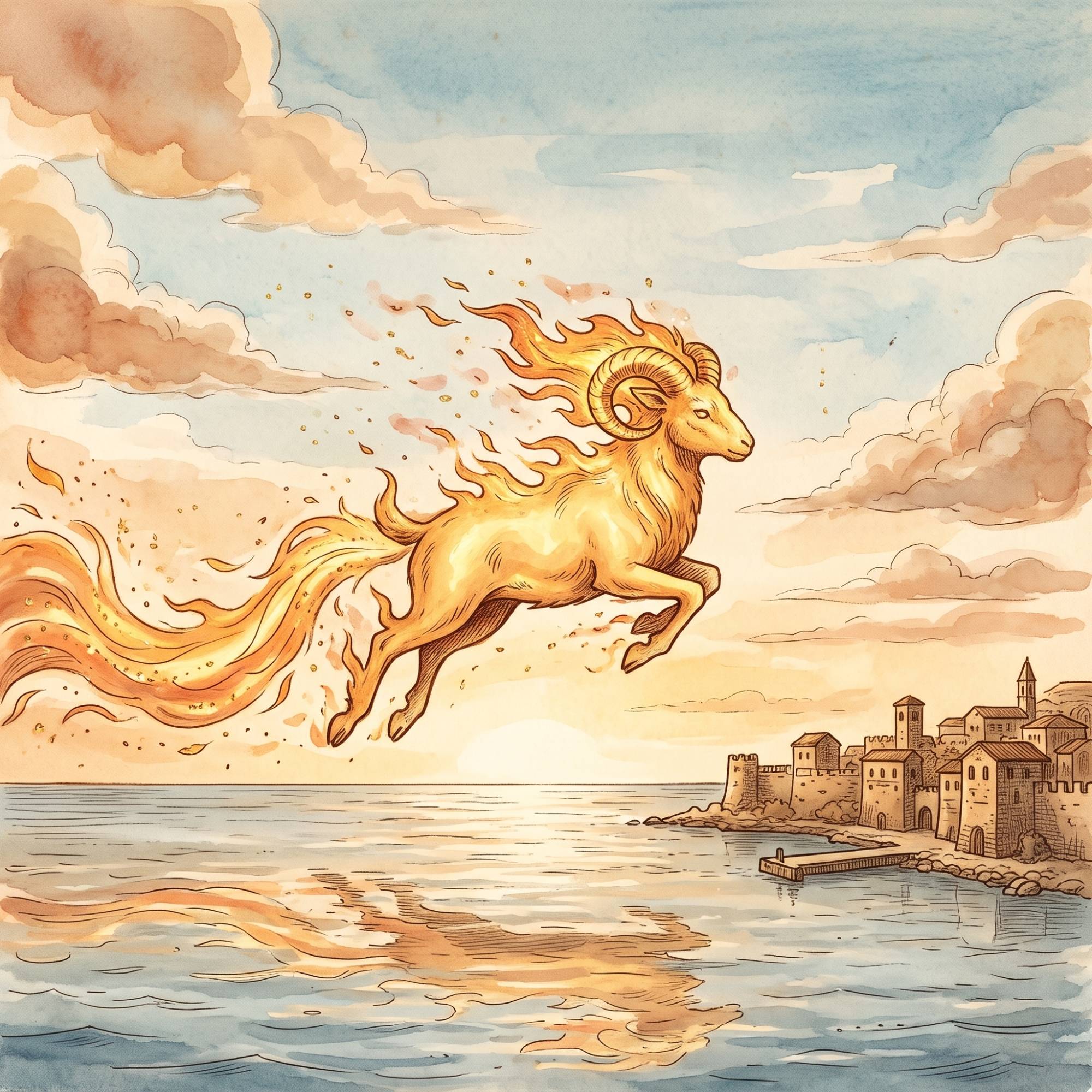
- The ram of flame. The courage to begin; the dream Thessa painted on the sarcophagus.
- The bowl mended with gold. Honouring the crack instead of hiding it.
- The spyhole in the kiln door. Being able to wait before seeing inside.
Chapter VII
Map of Ancient Lands
The lands Selin belongs to
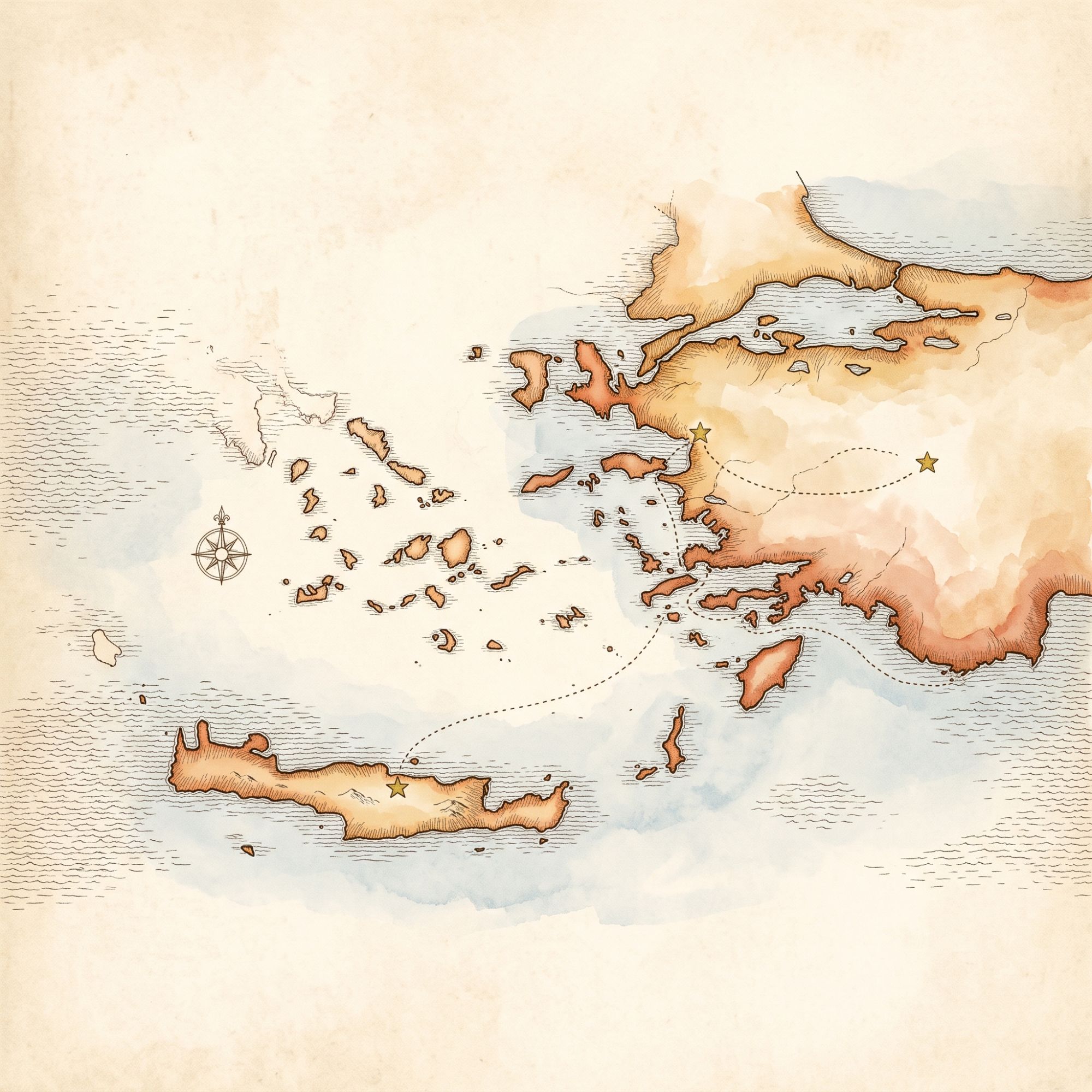
Selin’s map is drawn across both shores of the Aegean.
- Klazomenai (Urla). Thessa’s workshop. The place that calls Selin back to her roots.
- Kütahya and İznik. Anatolia’s cities of tiles and kilns. The trace of the masters who speak the language of Selin’s hands.
- Crete, Knossos. One of the oldest meetings of fire and earth in the Aegean. Selin’s sister across the sea.
One day, see these three places on a single journey, Selin. Begin in Urla, end in Crete. Somewhere in between, spend a day in a workshop; plunge your hands into someone else’s clay.
Chapter VIII
Editor's Note
A letter to Selin
Dear Selin,
Some people fear fire, some try to put it out. You chose to place it in a kiln and give it shape. It is the very path a woman in Klazomenai chose two and a half thousand years ago; that woman’s name was Thessa, and today the name of this path is Selin.
Your impatience is not your flaw; it is your engine. Your stubbornness is what lets you make a broken bowl again. When you look at your shelves, Selin, don’t see only bowls; each one is a seal on the promise you made that what you make will outlive you.
Every morning Selin opens the kiln, the legend begins again.
Finale
The Seal of the Legend
Selin’s legend on a single page
- Name
- Selin
- Archetype
- Sealkeeper of Fire and Earth
- The skies
- Sun in Aries · Moon in Scorpio · Aries rising
- Past life
- Thessa — Klazomenai, 6th century BC
- Inspiration
- Prometheus and Persephone
- Melody
- Darbuka and ney · from 9/8 to 4/4
- Scents
- Wet earth · pepper flakes and thyme · cedar
- Tea
- The Kilnside Blend
- Symbols
- The ram of flame · the bowl mended with gold · the spyhole in the kiln door
- Lands
- Urla · Kütahya and İznik · Knossos
This legend was written for Selin alone.
The painted terracotta sarcophagi of Klazomenai are real; Thessa is a fictional character.
Vabelos is a literary and symbolic narrative; it is not a substitute for psychological, medical or financial advice.